
Researchers are constantly finding new ways to deal with addiction. HALT is a newer self-awareness technique. It requires you to stop and take inventory of your emotions before you turn to drugs and alcohol.
This article will look at how it works and its impacts in recovery management and relapse prevention.
What is HALT?
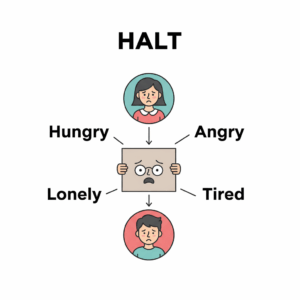
The HALT acronym stands for Hungry, Angry, Lonely, and Tired. These are four states of physical and mental health that could cloud judgment and reduce impulse control. The idea is to stop and think about how these emotions are impacting your decisions, so you find a healthier way to deal with them.
Let’s stop and break down each.
- Hungry: When you’re hungry, you’re cranky and more prone to stress. You may make poor judgments, such as substance use. A healthier solution is to follow a balanced diet that reduces stress and supports wise decision-making.
- Angry: Anger is a harder emotion to deal with, as it can come from various sources, some of which may be out of our control. Many will turn to substances rather than deal with anger. However, there are solutions such as mindfulness and relaxation techniques, or talking out your anger with involved parties, if possible.
- Lonely: Loneliness leads to isolation and depression, both of which contribute to substance abuse. Many lonely people feel misunderstood and unsupported and turn to substances to calm these emotions. While not easy to deal with, many programs suggest group therapy and other social activities to ensure people in recovery have the support they require.
- Tired: Tiredness, which can manifest as physical exhaustion or mental fatigue, can also make it difficult to think clearly and resist urges. Overcoming this feeling could be as simple as taking a nap, getting a good night’s sleep, or taking a break from your work routine.
What is HALT in Addiction Recovery?
HALT is integrated into recovery in the following ways.
- Recognizing Emotions: Therapists who follow the HALT method encourage patients to recognize emotions that are contributing to cravings. Rather than acting on their feelings, therapists advise them to step back and process.
- A Proactive Approach: Patients are advised to regularly check in with their emotions so they can determine how HALT dynamics impact their mood. This proactive approach can reduce the urge to use before temptation takes over.
- Say it Out Loud: Clients are often invited to say the word “HALT’ out loud and take the appropriate action to reduce risky behavior.
The History of HALT
The exact origin of HALT is unclear. However, it emerged in the mid-20th century through the work of addiction and recovery counselors. It is commonly used in Alcoholics Anonymous (AA) and other 12-step programs.
The technique was based on the counselor’s direct observations of patients. They noticed that people became more likely to use substances when they felt hungry, angry, tired, or lonely. Therapists developed a pattern-recognition approach that would help them identify and deal with triggers before turning to substances.
Since its inception, HALT has been widely adopted by mental health professionals. It has grown beyond a recovery tool and is used in various mental health applications. The idea is to stop and reflect on what you’re feeling before making bad decisions.
Is the HALT Method Effective?
Although there are no studies supporting HALT’s effectiveness, its widespread adoption reflects its perceived success. Additionally, various studies establish how emotional regulation helps people with addiction. For example:
- A 2016 NIH study reveals that emotional regulation training can reduce cravings in people recovering from addiction. It shows that people who can control their emotions become more capable of integrating coping strategies in high-risk situations, making them more resistant to substance abuse.
- A 2022 NIH study shows that people with substance abuse disorder have difficulty controlling their emotions.
- A 2023 study published in Frontiers in Psychology reveals that 12-step abstinence groups assist people with recovery by helping them manage their emotions and cope with stress.
Building a Plan to Deal with These Stressors
It’s one thing to be aware of stressors, but it’s another to know how to deal with them. You must develop coping strategies and determine which actions will help you resist your impulses. The following therapies and techniques will help you become more aware of these emotions so you can recognize them early and keep them under control.
Mindfulness
Mindfulness puts you in touch with your emotions and surroundings, increasing self-awareness. It helps you detect emotions and process them early on, before they overwhelm you. The practice also reduces stress and promotes self-love.
Those who want to practice mindfulness may consider meditation and deep breathing, or they may incorporate the approach into everyday activities. For example, a nature hike can help you achieve a more mindful state. When eating, really pay attention to the food’s taste and texture to heighten awareness.
Deep Breathing
Deep breathing can help you cultivate mindfulness, but it’s also a great way to deal with stressors as they arise. It reduces heart rate and blood pressure, immediately putting the body in a more relaxed state. The activity can lower stress levels, making you less likely to give in to your urges.
There are various deep-breathing exercises you can learn online, but simply inhaling and exhaling rhythmically can help. Consider researching more complex techniques to achieve higher levels of meditation.
Healthy Diet and Exercise
A nutritious diet and exercise routine are always recommended in addiction recovery because they boost self-esteem, reduce stress, and make people more accountable for their health, so they are less likely to put toxins into their bodies. However, they have additional benefits in the HALT approach.
A healthy diet is beneficial because it reduces hunger. People who follow a nutritious daily meal routine are less likely to feel hungry or upset.
Exercise is a healthy habit that can replace risky behaviors. It also improves mood, reducing anger, anxiety, and depression.
Quality Sleep
Sleep is crucial in addiction recovery, as it supports the body’s repair and renewal and helps with emotional regulation. It is essential in the HALT approach because it reduces tiredness and fatigue. Additionally, when we sleep well, we tend to feel more sated and less hungry.
To get quality sleep, follow a routine, going to sleep and waking up at the same time each day. Establish a relaxing bedroom environment. Turn off devices at least an hour before bedtime.
Social Circles
Establishing the right social circles also helps. People in recovery should hang out with individuals who support their recovery efforts and avoid those who will tempt them to relapse. In the HALT model, socializing also reduces loneliness and related emotions.
Recovery therapy often focuses on helping people connect. Family therapy is usually integrated to avoid codependency and enabling. Group therapy allows individuals to bond with their peers, letting them know they are not alone.
BlueCrest Detox Supports Recovery Goals
BlueCrest Detox is a provider you can trust. We integrate various therapies to help patients connect with their emotions. Our varied approaches can be customized to individual needs.
Contact us when you’re ready to achieve a healthier lifestyle.
FAQs
Is HALT only for people in 12-step programs like AA or NA?
No. Although HALT is common in 12-step programs, it can be integrated with other recovery methods and can also be used to address mental disorders not related to addiction.
How often should I use HALT?
You can use HALT as a quick daily check-in, when stressful situations arise, or when you notice mood shifts.
How can I remember to use HALT in real life?
You can remember to use HALT in real life by putting it on your phone lock screen, mirror, or notebook, or review it with your therapist until it becomes a habit.
Can family and friends use HALT to support someone in recovery?
Yes, friends and family can use HALT to support a loved one by reminding them to regulate emotions when they detect high-risk moments and to encourage self-care.
Can HALT replace therapy and other treatments?
No, HALT is not meant to replace therapy and other treatments. Rather, it is used alongside other approaches to ensure optimal mental health.